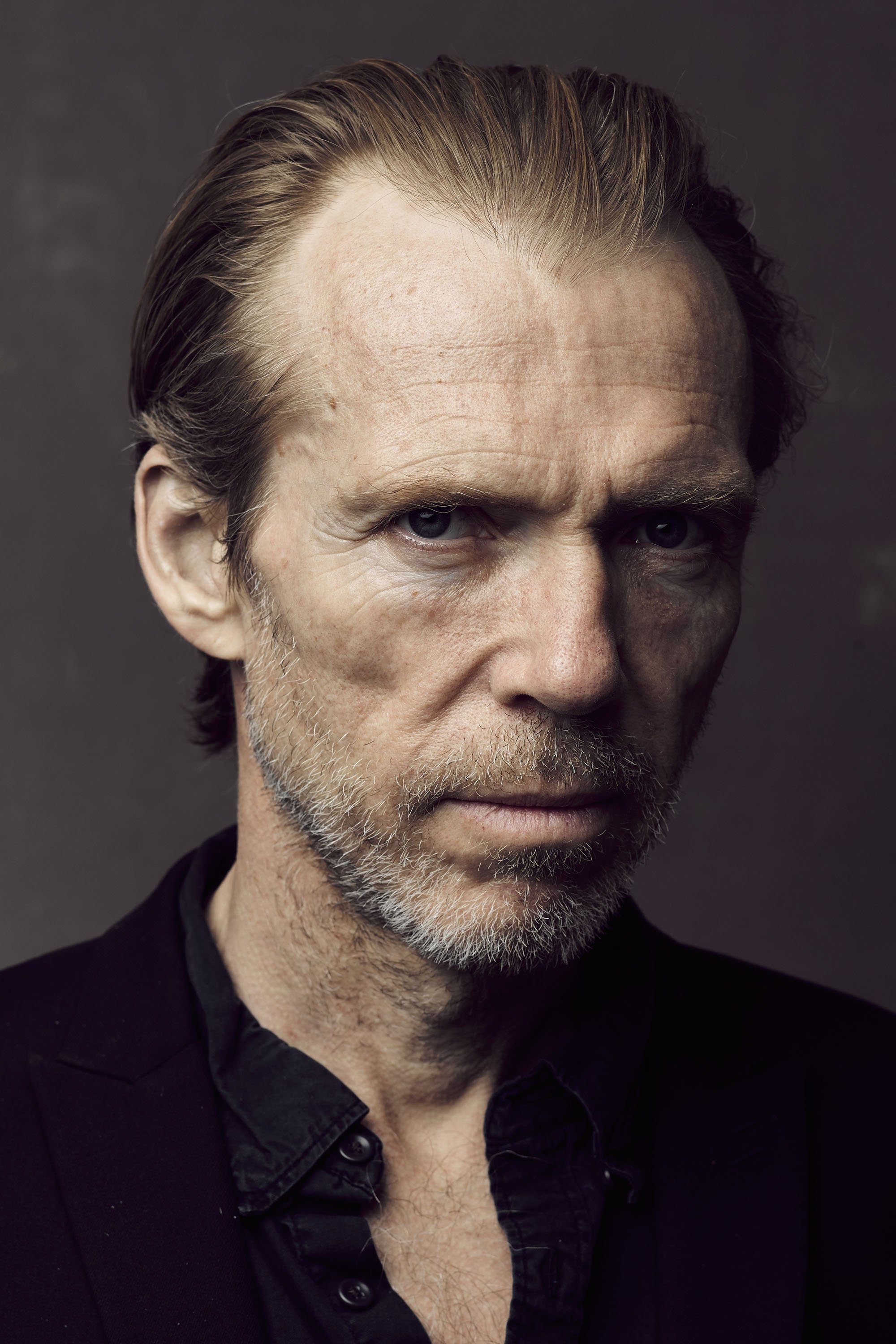
Glenn
Hetrick
Special Effects Makeup Designer & Creative Producer

Current Studio
Alchemy FX Studios
Primary Discipline
Prosthetic Makeup Artist
Region
North America
Status
Emmy Award Winner for Outstanding Prosthetic Makeup
Follow
Represented By
 Convention All Stars LLCNot yet on Taleventry
Booking Intelligence
The coffee table book 'The Art of Glenn Hetrick’s Alchemy Studios' was released in September 2024, highlighting his makeup artistry for 'Star Trek: Discovery'.
Known For
Lead Judge
Face Off
His blunt and technical critiques represent a high bar for excellence that fans of makeup artistry respect. Viewers identify with his passion for the craft, often attending conventions to show him their own portfolios and seeking professional validation from a known expert.
Prosthetic Designer
Star Trek: Discovery
The polarizing but technically stunning redesign of the Klingons made him a central figure in franchise discussions. Trek fans engage with him at panels to discuss lore-accurate biology and the physical challenges of bringing aliens to life on screen.
Scanner Demon
Charmed
Fans of early 2000s genre television appreciate his history of performing in iconic creature suits. This nostalgia-driven community values the physical effort of his early acting roles and the continuity of his career into design.
Why Book Glenn Hetrick
Glenn Hetrick appeals to dedicated 'Face Off' and 'Star Trek' fans who prioritize technical artistry. These enthusiasts attend in person for portfolio reviews and in-depth creature design panels. With 'Star Trek: Discovery' recently concluding, he remains the key figure behind the franchise's modern visual identity, making him a timely booking.
Genres
Convention Experience
Fan Engagement
Glenn Hetrick has a history of engaging with fans through interviews and official Star Trek platforms, indicating a positive and accessible presence.
Recent Work
Necroscope
2026This project targets the hardcore horror and vampire fandom, potentially expanding his footprint in the literary adaptation space.
Star Trek: Section 31
2025His involvement in this highly anticipated Star Trek streaming film is a major draw for sci-fi and Star Trek conventions.
Glenn — Biography
Glenn Hetrick is the CEO of Alchemy FX Studios and a defining voice in modern prosthetic design. Raised in Hellertown, Pennsylvania, he transitioned from a background in acting and independent horror to founding one of the industry's most active special effects houses. He is best known to global audiences as the lead judge on the Syfy reality competition series Face Off, where he evaluated the technical and creative output of aspiring artists for over a decade. His technical contributions include the redesign of the Klingon aesthetic for Star Trek: Discovery and the intricate prosthetic requi…
Community Verdict
Seen Glenn Hetrick Live?
Rate the guest experience from 1 to 10. If you leave a comment, it can appear publicly in the User Feedback section.
Scores stay hidden until at least 3 ratings are submitted.
Checking sign-in status...
Career Acts & Milestones

1998–2006
The Foundational Grind
Hetrick enters the industry by taking small acting roles that require heavy makeup. He uses these opportunities to study the mechanics of prosthetic movement from the inside. This period establishes his dual identity as both a performer and a burgeoning technical designer.

2007–2016
Alchemy and Industry Authority
He founds Alchemy FX Studios and secures major franchise work on The Hunger Games. This move shifts his career from a solo artist to a department head managing dozens of technicians. He becomes a public face for the craft through the debut of Face Off.

2017–2026
The Modern Franchise Era
Hetrick takes on the high-pressure task of modernizing the Star Trek creature library. Winning an Emmy confirms his status at the peak of the field. He focuses on integrating digital design with traditional sculpture to meet 4K resolution standards.
Industry Recognition
Primetime Emmy Awards
Outstanding Prosthetic Makeup
Star Trek: Discovery
Primetime Emmy Awards
Outstanding Prosthetic Makeup for a Series, Limited Series, Movie or Special
Star Trek: Discovery
Craft & Expertise
Prosthetic Design
Hetrick manages the transition from concept art to physical silicone and foam applications. He oversaw the comprehensive visual overhaul of various alien species for the Star Trek: Discovery era.
Reality TV Judging
As the lead judge on Face Off, he provides technical critiques that bridge the gap between fan appreciation and professional standards. His feedback focuses on anatomy, paint application, and screen-readiness.
Creature Performance
He frequently performs in his own designs, such as the Scanner Demon in Charmed. This experience informs how he builds suits that allow for maximum actor mobility and expression.
Studio Management
He serves as CEO of Alchemy FX Studios, coordinating large-scale makeup departments for major franchises. This includes managing high-volume production schedules for films like The Hunger Games.
The Registry
Total Credits
15
Career Span
1999-2022
Peak Decade
2010s
Peak Credits
7 titles
By Decade
By Role
By Genre
Highest rated credit: Charmed (2004) — 8.2/10
Complete Filmography — Glenn
A poster-free credit ledger. Every title links to its TMDB source while keeping the full registry readable at scan speed.

2020s
1 credit
2010s
7 credits
2000s
6 credits
1990s
1 credit
This product uses the TMDB API but is not endorsed or certified by TMDB.
Notable Locations
Los Angeles
United States
Productions
Home of Alchemy FX Studios and primary filming site for Face Off.
Toronto
Canada
Productions
Primary production hub for his work on the Star Trek franchise.
Atlanta
United States
Productions
Production location for major Hunger Games franchise installments.
Editorial & Reference
Glenn Hetrick: Star Trek Discovery Designer and Face Off Judge
Modern creature design often forgets that a human being must breathe inside the sculpture. This artist never makes that mistake because he started his career inside the suits. He spent years playing demons and monsters on sets where the glue was thick and the lights were hot. This physical history informs every ridge and air vent in his work. He looks at a character and sees a living biology rather than a simple mask. He understands that a monster only works if the actor can move their eyes and jaw to tell a story.
His shift toward hyper-detailed textures marks the end of the soft rubber era in science fiction. He build looks that survive the scrutiny of high-definition cameras and digital zooms. This approach is most visible in his work for the Star Trek universe. He added layers of bone and skin that suggest a long history of evolution. He pushes for a level of detail that casual viewers might miss but fans will debate for years. This focus on deep technical skill over easy shortcuts defines his role in the industry.
Promoters find a specific kind of value in his presence because he bridges the gap between fan and pro. He speaks the language of the shop floor and the red carpet. He is not just a name on a credit roll. He is a teacher who values the hard work of the craft. When he looks at a fan's work, he gives the kind of honest feedback that usually costs a tuition fee. This makes him a vital booking for any event that wants to celebrate the actual work behind the magic.
Long hours spent inside suffocating foam-latex suits during the late 1990s gave him a view of makeup that most designers lack. He worked as an actor and creature performer before he ever led a major studio. This time spent under the glue taught him how a mask needs to move to look real. He knows exactly where a suit will rub or where a seal will fail during a long day of filming. This practical knowledge is the foundation of his work at Alchemy FX Studios. He does not just create a look. He builds a functional second skin that allows an actor to perform through the prosthetics. This focus on the person inside the makeup is what makes his designs feel alive on screen.
Global audiences recognize him most clearly from his years as the lead judge on the Syfy series Face Off. He sat at the center of the judging panel for over a dozen seasons. Fans came to respect his high standards and his direct way of speaking. He did not offer soft praise for work that lacked technical skill. Instead, he showed young artists how to improve their sculpts and their paint jobs. This role turned him into a face of the industry for millions of people. It proved that viewers were hungry for real information about how movies are made. He became a guide for a new generation of makeup artists who value precision and bold choices.
His contribution to the Star Trek franchise remains one of the most discussed shifts in modern sci-fi history. He led the team that redesigned the Klingon species for the launch of Star Trek: Discovery. He moved away from the simple brow ridges of the past to create a complex, deep-sea biological look. Each character featured intricate patterns and realistic skin textures that felt truly alien. While some long-time fans found the change surprising, the technical quality was undeniable. He brought the species into the 4K era with a look that worked under the sharpest lenses. This project showed his ability to take a classic icon and find a new way to make it feel visceral and real.
Fandoms across different genres claim him as a vital part of their favorite worlds. Horror fans remember his early work on shows like Charmed and Buffy the Vampire Slayer. Sci-fi fans follow his work on The Hunger Games and the recent seasons of the Star Trek universe. These communities show up to conventions to talk about the tools of the trade. They want to know about the types of silicone he uses or how he manages large-scale creature builds. He often hosts portfolio reviews where he gives fans a chance to show their own work to a professional. This makes his appearances feel like a high-level workshop for aspiring artists and dedicated fans alike.
Today, his studio Alchemy FX remains a busy hub for high-concept genre television and film. He continues to push the boundaries of what is possible with practical effects in an age of digital tools. Many fans now revisit his work on streaming platforms like Paramount+ and Peacock. His legacy on Face Off continues to inspire new artists who find the show through digital archives. Even as technology changes, his focus on the tactile reality of makeup keeps his work relevant. He is currently involved in several unannounced projects that lean into his love for dark, detailed creature design. Fans look for his name in the credits as a sign that the practical effects will be top-tier.
His public philosophy centers on the idea of technical perfection as a form of respect for the audience. He often talks about the need for artists to study real-world anatomy before they try to build a monster. This focus on the "why" behind a design is a common thread in his talks and interviews. He believes that a creature should look like it could actually exist in its own environment. This commitment to realism has earned him multiple Emmy nominations and a win for his work on the Trek series. It is a story of a fan who became a master by never settling for a design that was merely good enough.
Meeting him at a convention is a different experience than meeting a typical screen actor. He provides a direct link to the physical work of making movies. People bring their own masks and sculptures for him to see, seeking a professional eye. He treats these encounters with the same seriousness he brought to the judging table on television. This creates a space where fans feel like they are part of the industry for a moment. He represents the bridge between the people who watch the shows and the people who build them. For an event organizer, he offers a mix of star power and deep educational value that keeps audiences engaged for hours.
Frequently Asked
6 questions answered